
The real real data

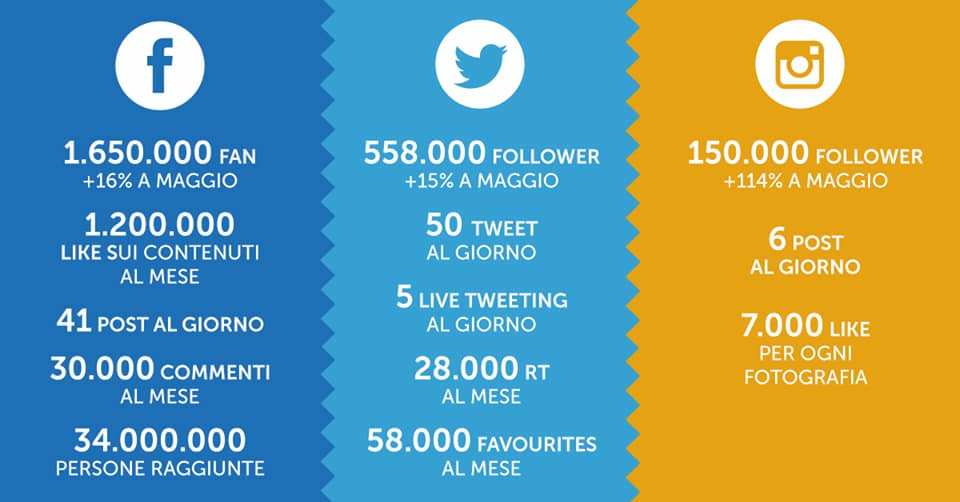
I came across a very interesting post on Facebook from the team that is handling Social Media for Expo 2015 in Milan. How is the event going? We don’t know. The organisers and/or City Hall and/or the national government, it’s not clear, decided not to give us, you know, the stupid citizens who actually paid for this event with our taxpayer money, any numbers. Total number of tickets sold? We don’t know. Average attendance at the event compared to the 100,000 people per day they were expecting? Same as above.

What we do know, on the other hand, is how many fans and followers Expo has; how many posts and likes and comments; tweets, and retweets, and live tweets etc. You name it, we have the data. Does all this activity lead to ticket sales? No, we don’t know that, either.
Advertising: Not because it worked

Why do we have an advertising funded Web? Not necessarily because it works. It doesn’t.

Advertising became the default business model on the web, “the entire economic foundation of our industry,” because it was the easiest model for a web startup to implement, and the easiest to market to investors. Web startups could contract their revenue growth to an ad network and focus on building an audience. If revenues were insufficient to cover the costs of providing the content or service, it didn’t matter—what mattered was audience growth, as a site with tens of millions of loyal users would surely find a way to generate revenue.

And are start-ups making money on ads? No, only a rare few. When is Pinterest going to turn a profit? And even the profitable companies seem not to make a ton of money. Take Facebook. $791 million in profits in a quarter looks good. But on 1.32 billion users, that’s 60 cents per user. Average time spent on the site? 40 minutes per day. Or 60 hours per quarter, which means the average profit per hour spent on their website is 1 cent.

Want to do better than Facebook? You need to move deeper into the world of surveillance. Great stuff. Read it all: The Internet’s Original Sin.

Uber Zero

Seldom, if ever at all, have I read such a long, elaborate and so well thought-out post about something — like Uber Zero — that doesn’t make any sense at all.

Free, ad-supported Uber rides are inevitable, and if Uber doesn’t do them, a different competitor – perhaps Google! – will do it.

To which my only counter-question is: What is it, 1998 all over again?

There are three aspects of this post that trouble me. The first is: what’s wrong with actually paying for a service? Why does everything always have to be paid for by somebody else (by an advertiser)? The second is: what kind of ads would they show me? Ads for a new car, for example? But why should I pay for a new car when I can get a nice one plus a chauffeur for free? And why can’t I get the car for free as well, while advertising something else? Where does the nonsense stop? And the third: doesn’t advertising work when the cost of adding one more ad is basically zero and all profit? Think newspapers, television, Google, Facebook etc. In this case, every ride costs on average 20 bucks. Which means the CPM would be 20,000 USD. What kind of luxury product can spend that kind of money in ads? Worse yet: in ads “targeted” towards people that won’t even pay for their cab ride…

And you call this an analysis?

And you call this an analysis? Twitter’s new CFO on Facebook…

On mobile there are fewer ads since there is no right hand rail. But mobile monetizes better which is rare….a key question here is why does mobile monetize better? Is it due to higher prices per click or higher click through rates. If its the latter ie click through rates than its enormously positive because higher click through rates are highly correlated with better ROI which leads to ad spending.

What about: because ads on mobile are much larger? They take up the whole damn screen, rather than being small and unobtrusive as on the desktop. Unobtrusive is a nice word, but what it means is that nobody sees them. And what happens on mobile, ads being huge and people having large, fat fingers, is that people click on them, whether they intended to do so or not. Fat fingers. That’s about all the “magic” of mobile if you ask me.