The real real data

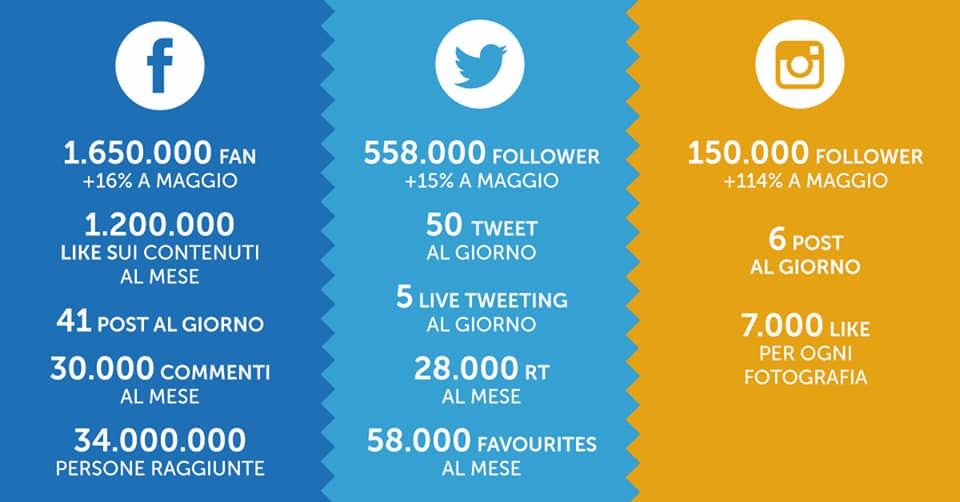
I came across a very interesting post on Facebook from the team that is handling Social Media for Expo 2015 in Milan. How is the event going? We don’t know. The organisers and/or City Hall and/or the national government, it’s not clear, decided not to give us, you know, the stupid citizens who actually paid for this event with our taxpayer money, any numbers. Total number of tickets sold? We don’t know. Average attendance at the event compared to the 100,000 people per day they were expecting? Same as above.

What we do know, on the other hand, is how many fans and followers Expo has; how many posts and likes and comments; tweets, and retweets, and live tweets etc. You name it, we have the data. Does all this activity lead to ticket sales? No, we don’t know that, either.

Non esistono i Social Media

Lo dico da anni: Non esistono i Social Media. Esiste Facebook. Gli altri, chi se li incula? L’idea dell’esistenza dei “social media” serve solo a chi vende “consulenza per i social media”. Come se il web, prima dei “social media”, fosse stato “asociale”. O come se il web fosse stato un posto adatto alle aziende, o adatto alla pubblicità.

Il che, chiaramente, non è vero. E Facebook non è “un social network”. Facebook, che ci piaccia oppure no cambia poco, è quella roba che sta sostituendo il web.

From the blue “e” to the white “f”

Remember when the average Joe thought that Internet Explorer’s blue “e” icon somehow stood for “the Internet”? You thought that was bad?

Many in the world are at risk of growing web-literate, so to say, thinking that the Internet is a white “f” on a blue background on their Android phone.

And any time you speak of “Social Media”, you’re doing them a favour.

Facebook, plus of course Instagram, Whatsapp for those who like things simple, and their own Messenger, which they are styling after Line and WeChat and trying to make into a platform in its own right, is not “a” Social Network, but rather THE Social Network. The new AOL, as Jason Kottke said back in 2007. Facebook is what we used to have before Facebook, i.e. the Open Web, but behind closed doors, delivered very well and a bit sanitised. There are plenty of reasons why you should be worried.

One of the main reasons why I am worried is precisely because you are not.

A chi servono le statistiche

Non è una domanda: ho proprio deciso di spiegarti a chi servono le statistiche.

In breve: a chi ha qualcosa di cui si deve giustificare. Quindi, tira fuori dei numeri. Qualsiasi tipo di numeri. Idealmente, con dei bei grafici colorati. Facciamo due esempi semplici semplici: il Social Media Marketing e il Comune di Milano.

Hai deciso di “investire” dei soldi su Twitter, Vine, Vimeo, Tumblr, Instagram e sa il cielo quale altro sosciàl ancora? E’ il futuro, lo dicono tutti. Se le vendite si fossero impennate, non avresti avuto bisogno di giustificarti di nulla, giusto? Se qualcosa di strano o simpatico che hai fatto con uno di questi strumenti ti avesse portato al Tg1 delle 20, uguale.

Se invece non è chiaro cosa fai tutto il giorno e soprattutto se serve a qualcosa oppure no, devi tirar fuori delle info-balle (info-grafiche) per far capire a tutti che il tuo contributo è essenziale per il futuro dell’azienda.

Prendiamo il Comune di Milano. Lasciamo da parte le simpatie, che Maran è l’unico simpatico e alla mano che io abbia mai conosciuto del PD di Milano. Ormai sono quasi 4 anni che sono al governo. A me sembra la stessa città di prima.

Meglio: lo stesso parcheggio a cielo aperto di automobili di prima.

Sì, certo, di cose ne hanno fatte di sicuro. Una che a me piace ricordare è che hanno messo a posto le scale mobili rotte della metropolitana, cioè un lavoro oscuro per il quale non si finisce osannati sui giornali. Ma la città è cambiata? No.

Sono pronto a scommettere che fra un anno, alle prossime elezioni, ci racconteranno quanti km di piste ciclabili hanno fatto. Se le cose fossero cambiate e funzionassero davvero, lo si vedrebbe a occhio nudo.