Quando moriranno i banner? Non lo so. In effetti, è dal 2000 che dico che moriranno. Finora non ci ho preso. O forse non ci ho preso quanto sembrava non averci preso uno che negli anni ’70 diceva che l’Unione Sovietica sarebbe finita al collasso.
Se non sono morti finora è perché, nell’ordine: Adwords ha riportato entusiasmo a tutto il settore della pubblicità sul Web; i prezzi di Adwords sono saliti così tanto che ben presto ci si è dovuti spostare anche su spazzatura che costava di meno; sono migliorati i criteri scientifici o supposti tali di fare targeting, anche se non i tassi di click, che anzi sono sempre in discesa, anche se nessuno lo vuole ammettere.
E soprattutto, non sono ancora morti perché sono cambiati i criteri in base ai quali giudicare l’efficacia o meno dei banner stessi. Se non si riesce a superare l’asticella, basta posizionarla più in basso. Come noto, il cosiddetto “Interactive Advertising” per spingere il quale fu creato IAB, Interactive Advertising Bureau, è diventato “Display Advertising” perché non ci “interagiva” (neanche un click) nessuno.
E si è smesso di guardare al risultato diretto, tipo click, compra, funziona, per accontentarsi di una ipotesi che dice che il navigatore “è stato influenzato da”, anche se non ha cliccato (e forse anche se neppure l’ha visto). Questa supposta influenza esiste o non esiste? E’ possibile che sia meno grande di quanto ci dicono? Chi lo sa; i diversi investitori pubblicitari scelgono liberamente come e quanto illudersi.
E’ però quanto meno curioso che in tutti questi calcoli che si vorrebbero “scientifici” non vengano prese in considerazione le pubblicità in tv, alla radio, sui giornali, il valore del brand, le iniziative sul punto vendita, le sponsorizzazioni, gli eventi, le PR. Se uno finisce per comprare sul web è “in parte perché ha visto un banner”. O perché “gli è stato servito”, visto che il 56% dei banner non sono neppure visibili?
Nessuno, che io sappia, stima il peso avuto dalle altre iniziative di cui sopra. Chissà, forse è semplicemente perché non ha senso produrre una giustificazione per cose che non ne necessitano una. In ogni caso, rispetto a 15 anni fa non sono più così ingenuo da pensare che bastino i fatti per far saltare un settore economico che vale svariati miliardi di dollari, e tanto meno uno così opaco da prestarsi a truffe mai viste prima.
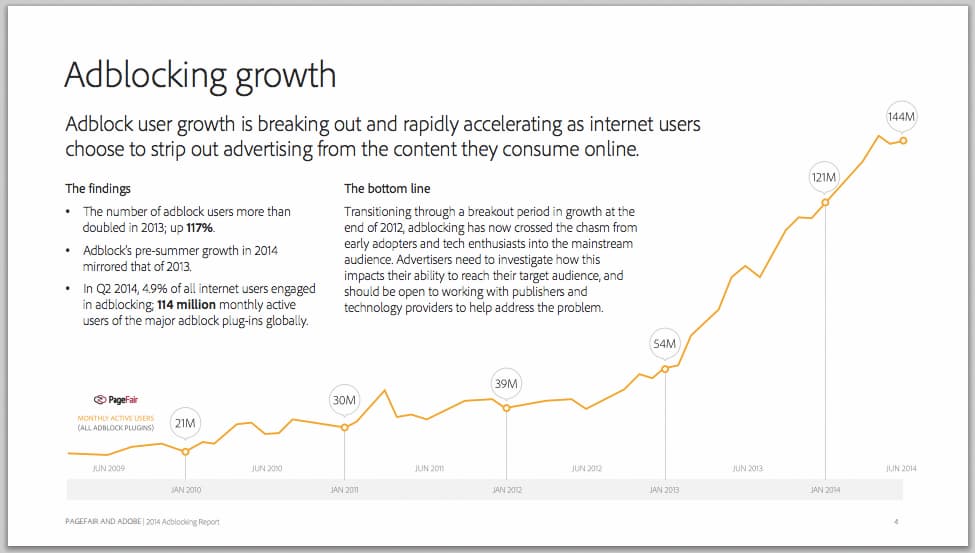
Più semplicemente, a cosa servirà tutta questa scienza o supposta tale quando non ci sarà più nessuno a cui mostrare pubblicità? (da Adblocking goes mainstream)